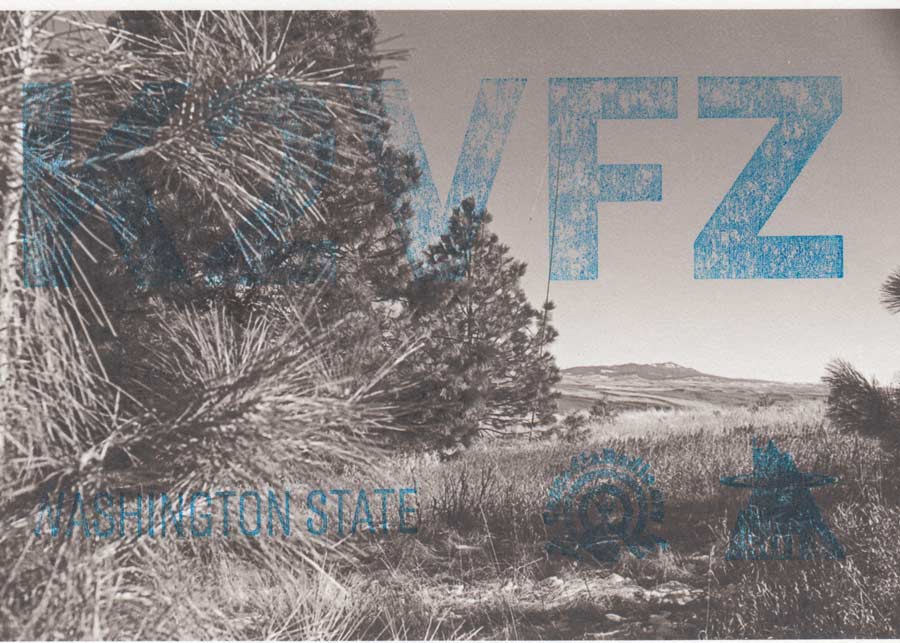
For the non-ham, a QSL card is basically a postcard-sized print copy confirmation of an on-air contact. Dating back to the days well before we were confirming contacts on the internet, QSL cards are a bit of a historical relic, or more appropriately, a tradition that is unfortunately not just modernly uncommon but also seemingly an afterthought.
Last year was my first in ham radio. I made just over 100 contacts during my SOTA activations (100 is not that many) but I only received one QSL card—a less than 1% return. And actually that’s not even true, because my first card received was from an activation I did in Jan of 2025… but the point remains, it doesn’t seem to be common.
I was excited to receive my first QSL card. Most of these cards are quite personal, with a photo of either an operator’s radio shack, hobby, or nearby landscape scene. This card was a nice picture of Mount Hood, as KD7J lives just north of Portland in Scappoose, Oregon.
This was the nudge I needed to make my own card. I began to research how because I naturally wanted to know what expected information to include, if there was a preferred size, etc. and I was greatly disappointed to have returned to me videos and write-ups such as “The simplest easiest cheapest QSL Cards” and “Get One Thousand Custom QSL Cards for $61!” and “QSL Cards in 2 Minutes”.
Kindly fuck off. Or, more eloquently, as a great Jedi Master once said, “Do or do not. There is no try.”
To be clear, I understand that as a graphic designer / photographer / artist I’m an anomaly. But for a crowd that purports itself as a one that carries traditions forward… this anti-QSL card mentality feels, quite frankly, hypocritical.
Anyhow. This is my realm and my opportunity to accurately represent my own scruples. So here’s my process:
- During the approach and activation of the summit, photos are taken with both a 35mm and 120 format camera on, typically, black-and-white Ilford HP5+ film.
- Post-activation, the film is developed and scanned into the computer at home.
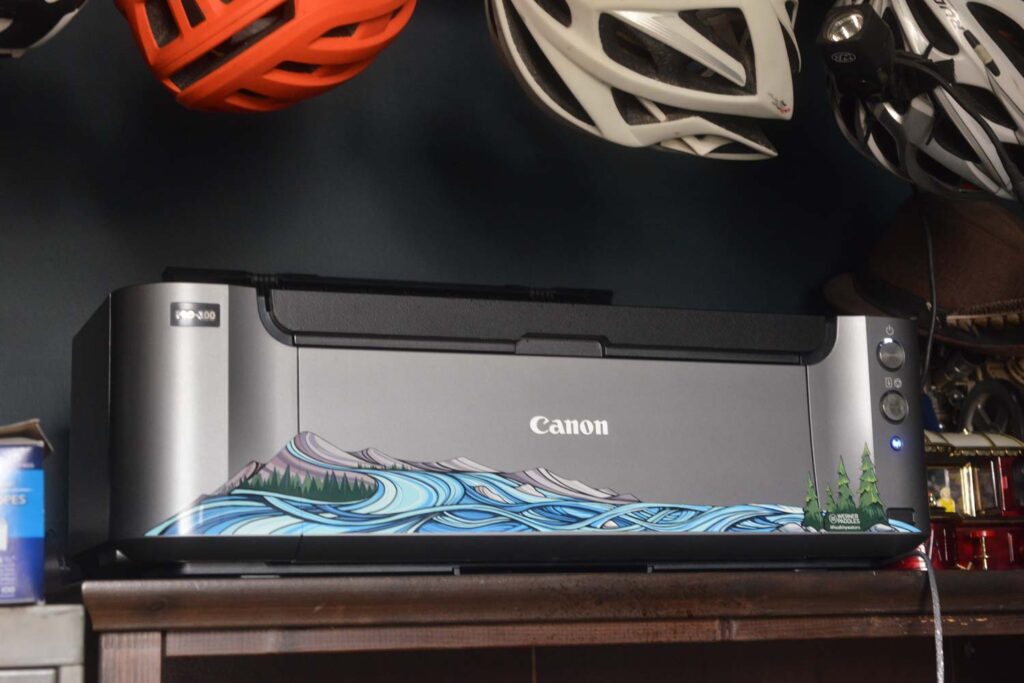
- If a QSL card is received from a contact on that SOTA activation, a representative photo from that trip is chosen and printed out on Hahnemühle 4×6 photo cardstock.
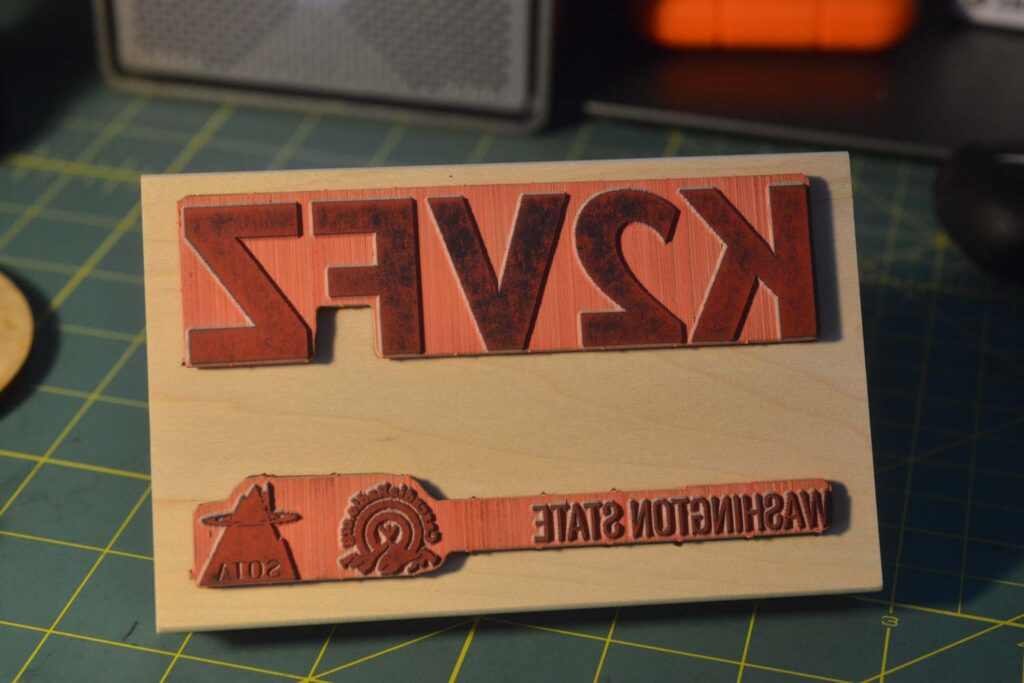
- Overprinted on the photo is a rubber-stamp of my callsign along with icons of the Cascade Radio Club and SOTA organization.
- On the back of the card, I print out the pertinent information (date, mode, etc, rst, summit code, etc.) with a fountain pen using a Sailor state-specific ink color.
Could I possibly make this any more of a pain-in-the-ass, cost-prohibitive exercise in pretentiousness? I think not. But if you receive a QSL card from me, know that I truly valued our contact, your chase, and hold a deep respect for the hobby.
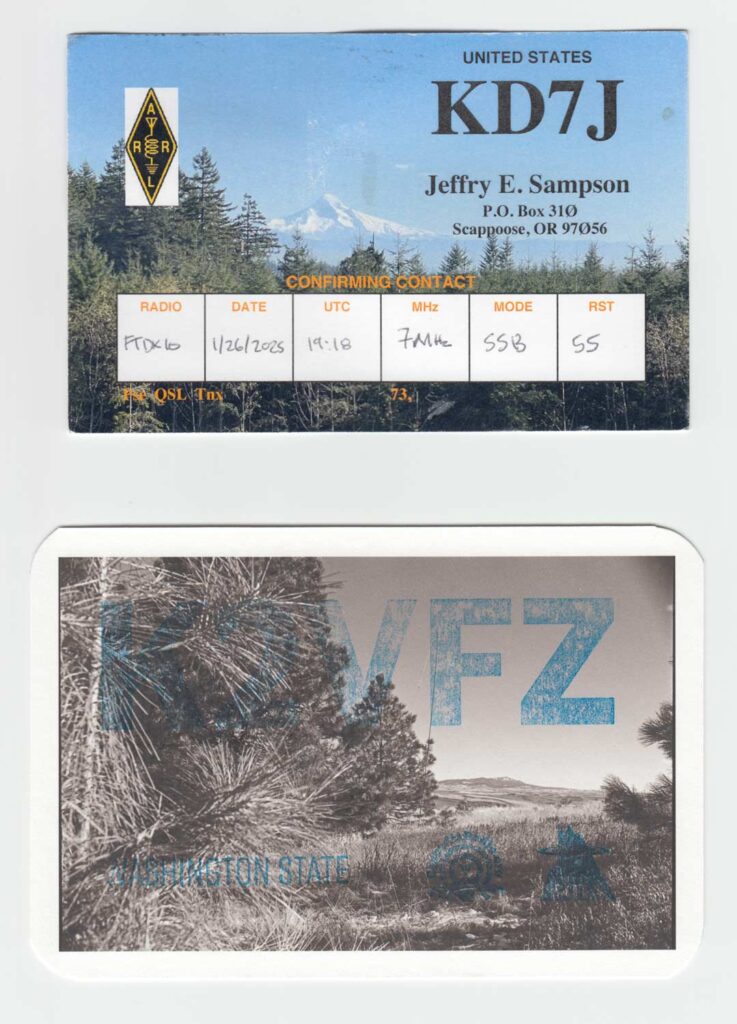
To fair, my first QSL card is a bit sucky. But one shouldn’t hide their imperfect work. If you put in the effort and learn something, it’s solid. My next will be better.